太极张三丰
Chinese team develops intelligent vision sensor that turns light signals into AI-ready tokens, reducing use of energy_我的网站

A |
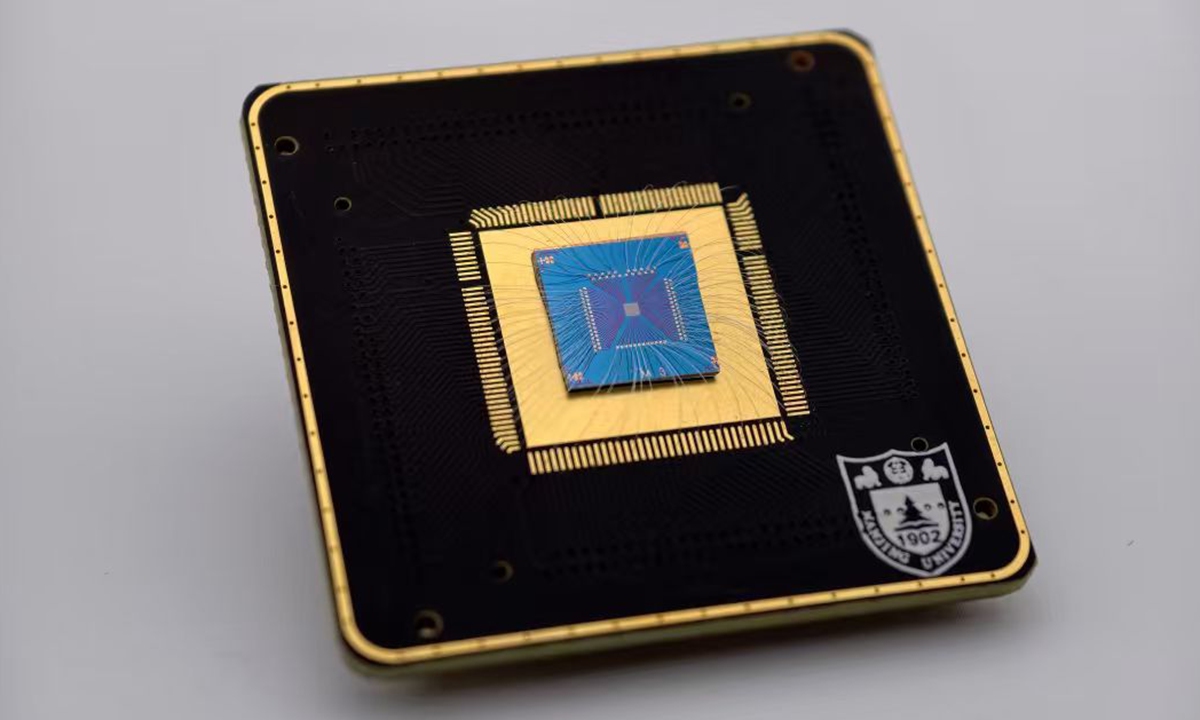
The new ultra-low-power intelligent vision sensor chip "LightTok" developed by a research team from Nanjing University. Photo: from Science and Technology Daily
A Chinese research team from Nanjing University has developed a new ultra-low-power intelligent vision sensor chip, dubbed "LightTok," that can convert light signals into tokens within the sensor, significantly reducing the high energy consumption caused by frequent transfers of massive amounts of redundant data, the principal investigator told the Global Times.
According to a release from the Institute of Brain-Inspired Intelligence of Nanjing University, tokens generated by the LightTok chip can be directly fed into a Transformer encoder for image recognition.
"Our design idea was to move token generation onto the sensor itself, allowing the chip to directly produce tokens that AI models can process once light reaches the sensor," Miao Feng, director of the Institute of Brain-Inspired Intelligence at Nanjing University, told the Global Times on Thursday. "These tokens contain complete image information."
Physical AI refers to intelligent systems capable of autonomously perceiving, reasoning, acting and receiving feedback in the real world, representing a key pathway for AI to move from the digital realm into the physical world. Vision-based physical AI systems powered by large AI models need to convert visual information from real-world environments into tokens that can be processed by AI models before feeding these tokens into Transformers for subsequent tasks.
In traditional visual perception pipelines, light signals must go through multiple stages, including image sensing, analog-to-digital conversion, data buffering and transfer, digital image patching and embedding, before being transformed into tokens that AI models can process. The frequent transfer of massive amounts of redundant data has resulted in high energy consumption at the edge, according to a report by Science and Technology Daily.
The LightTok chip directly addresses a key challenge in physical AI hardware: how to efficiently acquire and tokenize visual information from the physical world with low energy consumption, Miao said.
The LightTok chip consists of a photosensitive memory array and peripheral circuits. The team built the array based on single-layer molybdenum disulfide (MoS₂) floating-gate phototransistors, with each pixel capable of sensing light, storing information and performing analog computing. By processing optical information directly within the chip, the device can convert captured visual signals into tokens for AI models, according to the research team.
The current LightTok prototype has a resolution of 32×32 pixels, or 1,024 photosensitive pixels, which is still smaller than that of smartphone cameras and industrial imaging systems. However, Miao said the technology is compatible with CMOS manufacturing processes and can be scaled up. With wafer-level growth of molybdenum disulfide materials, the chip could potentially achieve a scale comparable to existing imaging devices.
Miao said the chip also draws inspiration from the information-processing mechanism of human vision. Similar to how the retina extracts key visual information before transmitting it to the brain, the chip also aims to process visual information at an early stage.
The research was conducted in collaboration with another research team from the National University of Singapore. The findings were published on Wednesday in Nature Sensors, an internationally renowned journal in the field of sensing technology, according to the release.
Potential applications for LightTok include drone systems, autonomous remote sensing and small-scale embodied AI systems, Miao said. In these scenarios, devices need to continuously detect, understand and track targets, generating massive amounts of visual data. By reducing the energy required for visual processing, the technology could extend the operating time of drones, satellites and small robots with limited power supplies, the expert said.
。 夏日传佳讯,幸运耀滨城!7月8日,体彩超级大乐透第26076期开奖,大连购彩者收获重磅好运:中出1注基本投注一等奖,单注奖金达1000万元。进入7月以来,辽宁购彩者幸运满载,继7月4日第26074期沈阳中出大乐透一等奖之后,大连昨晚接力再中一等奖1注,5天2注一等奖,让2026年的下半年更令人期待。这同时也是今年大连诞生的第4注大乐透一等奖,辽宁购彩者的第21注大乐透一等奖。本期超级大乐透前区开奖号码为15、20、27、28、35,后区开奖号码为02、11。当期全国共开出4注基本投注一等奖,其中1注千万头奖花落辽宁大连第2102016865号体彩实体店,门店坐落于甘井子区甘南路44-5号。大奖实体店代销者姜先生,于7月9日清晨接到体彩中心工作人员通知,才知晓店里中出千万大奖。“近期世界杯竞猜赛事火热,昨晚比赛少,我早早闭店休息,这才错过了当晚的喜讯通知电话。”姜先生言语间满是欣喜和激动,第一时间将中奖喜讯分享给妻子、门店销售员赵女士。赵女士介绍,这家店已经营了8年有余,夫妻俩一直坚持合规经营、诚信服务初心,为周边购彩者提供正规、安心的购彩服务。

B | “我们店地处居民区,流动顾客相对较少,所以我们就深耕服务,用心经营,积累了大批稳定的回头客。”据悉,该店还是大连市体育彩票中心授牌的体彩“爱心驿站”。多年来,该店积极践行体彩公益初心,持续为环卫工人、过往市民免费提供兑换零钱、热水、充电、雨伞等便民暖心服务。

C | 此次店内中出千万大奖,让这家老店一跃成为辖区内新晋“体彩大奖福地”。

D | 谈及中奖喜讯,赵女士激动不已:“亲手打出这张千万大奖彩票,真有种梦想成真的感觉。

E | ”日常经营中,赵女士始终不忘向购彩者传递“公益彩票、理性购彩”理念,内心默默期待着为购彩者敲出一份惊喜,这份美好期许如今圆满落地。开年至今,幸运接连眷顾滨城,多注一等奖接连落地,不仅让购彩者收获满满惊喜,也充分彰显了超级大乐透回馈大众、普惠民生的产品特质。中国体育彩票始终坚守“来之于民、用之于民”的发行宗旨,体彩公益金广泛用于体育事业发展、民生保障、公益帮扶等领域。每一次购彩,都是一次善意的汇聚,购彩者在体验乐趣、邂逅幸运的同时,也默默为社会公益事业贡献着温暖力量。幸运不停歇,惊喜在路上!当期大乐透开奖结束后,奖池依旧保持高位,高达8.04亿元,持续为广大购彩者预留充足中奖惊喜与期待空间。

F | 中国体育彩票温馨提示:请广大购彩者量力而行,理性投注,快乐购彩。

G | 严守合规购彩底线,享受健康购彩乐趣!。

H |
Current article:http://iyu0vej.dinggaxilianmaiyuejienianguai.shop/news/20260826_4904.html
Published on:09:11:01